
Moral Injury in First Responding & The Helping Profession
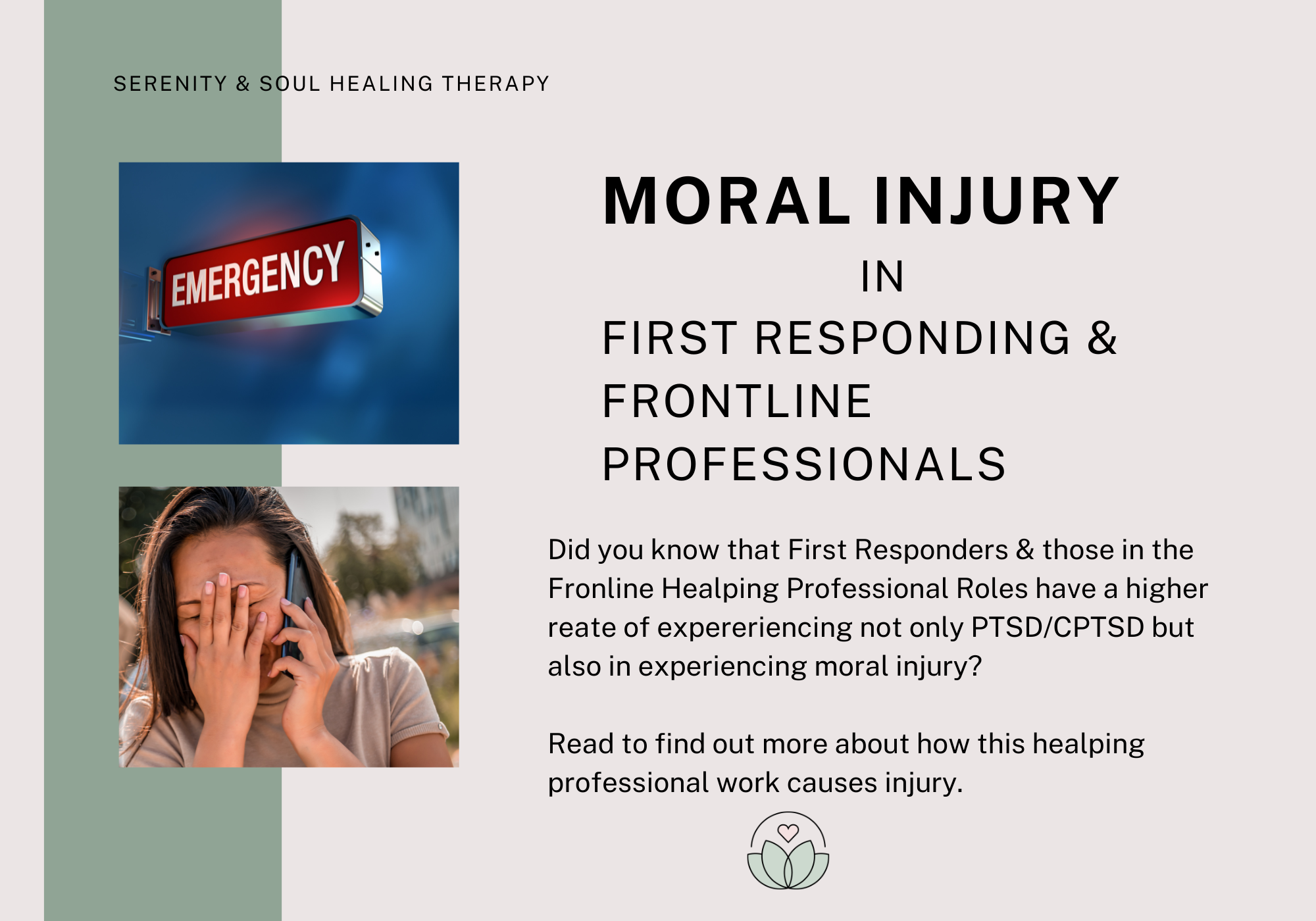
When we think of first responders and those of us working in the frontlines or as a helping professional, we know these roles come have a higher risk of PTSD, but what about moral injury? Have you ever heard of it? Chances are most people haven’t because we aren’t talking about it enough. So today we are talking about moral injury; what it entails, the risks and knowledge of how to keep mentally well and fit especially in this challenging profession.
Most of us who end up in the first responding role or in the frontline helping profession, do it because we have big hearts, we care too much, we want to make change, we want to give to others what we never got ourselves or because something about it resonates with us. For some, they are drawn to it because it feeds their narcissistic ego. While the latter is true for some, for most of us, there is something about it where we found our true calling. Most of us are in it for the right reason and we often enter the field with a positive outlook and filled with high hopes that we are going to make change and make a difference. Sometimes we do make a difference in the small ways and other times, we don’t truly know the difference or impact we may have on someone else’s life.
But what this job doesn’t come with and should come with, is a warning label. The same warning label that is written on prescription medications such as opiates; “Enter at your own risk” and “will cause permanent damage”. We know that being a first responder or a professional in the helping world brings about higher risks of PTSD, but an even bigger but silent injury that we don’t recognize is moral injury.
What is Moral Injury?
It happens when we witness events, situations or experience challenges that go against our values, ethics, morals, when we have to act against what we know is “right” or we have to follow a policy that is not morally in the best interests of the individuals we are helping. Moral injury also happens when we are forced to abide by policy, regulations or the “red tape” because of management despite what is inherently best or ethically right.
It happens when we are continuously responding to the same types of calls over and over because there is no strategy or solution put in place despite what policy makers or management says. It’s what happens to us when we have to face the tough parts of our job and respond to calls where things shouldn’t be happening but are because nothing has been put into place to address the challenges that we face in our community. It’s the calls where want to do what we think is best but can’t because of what the “rules” and policy specifies. This, doing this over and over, starts to take its toll on us and we start to become more cynical.
Moral Injury also comes from:
witnessing harm to others: when we see people in distress but can’t help them or fix them
doing things against what we know and believe is the right thing to do
feeling abandoned and betrayed by management, leadership and those in policy making decisions: we know those who make decisions and policies are out of touch with what is really going on in the frontlines.
witnessing social injustice: knowing there is social injustice and things shouldn’t be happening a certain way but knowing there is nothing we can do to change it
How Moral Injury Impacts Us?
creates anger and resentment especially towards leadership and management
creates distrust and disbelief in leadership, management or those who are supposed to be making positive changes because we don’t trust that they are going to do what they actually say
creates emotional numbness, detachment and cynicism on the job because we don’t see any changes being made despite of what we are told
can create rumination: we may find ourselves replaying certain situations or scenarios over and have difficulty letting it go because we are trying to figure out what else we could have done differently or gotten to a different outcome.
Because moral injury is subtle and gradually builds over time, it may be difficult to spot as the symptoms may be less noticeable compared to something such as PTSD. Over time, moral injury can have a significant impact on both our physical and mental health. It is important to recognize and acknowledge moral injury and by working with a trained professional, there are ways to work through it and heal so that you can continue to have a long fulfilling career. It is also important to recognize that being a first responder or a frontline helping professional is a challenging job and therefore is important to practice not only good mental health, but also self compassion.
Looking for extra support, contact Mallery@serenityandsoulhealing.com who works in supporting first responders and their mental health.
#yqr #yqrmentalhealth #yqrcounselling #mentalhealthmatters #yqrfirstresponders #reginacounselling #serenityandsoul #serenityandsoulhealingtherapy #fuelyoursoul
