
Narcissistic Abuse and Complex Post Traumatic Stress Disorder (C-PTSD) & Healing
Learn more about healing from Narcissistic Abuse & C-PTSD
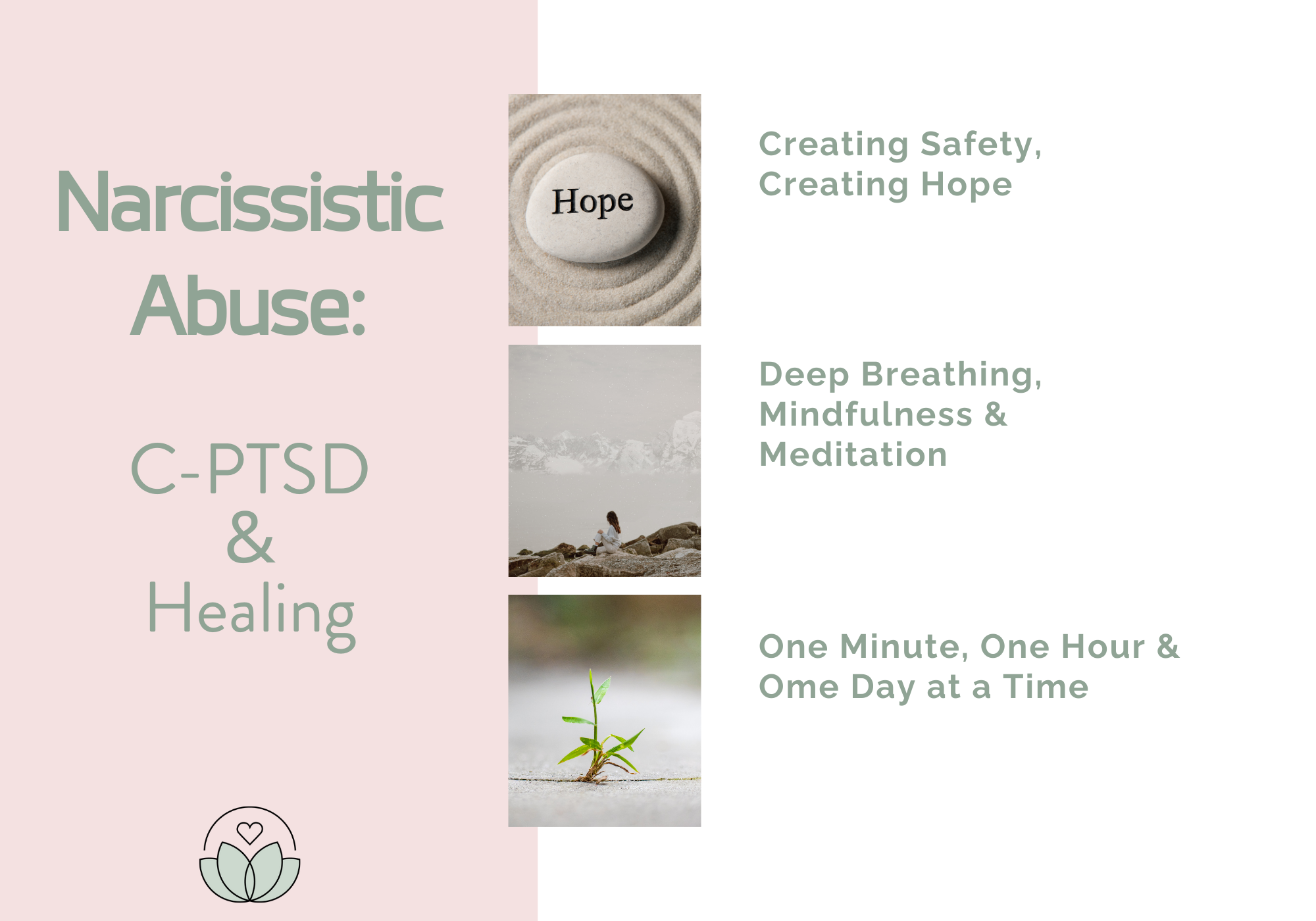
Healing from Narcissistic Abuse & CPTSD
Did you know that you do not have to suffer from physical abuse in order to experience post traumatic stress disorder (PTSD) symptoms or complex- post traumatic stress disorder (C-PTSD). It is unfortunately very common for survivors of narcissistic abuse to experience CPTSD symptoms because the ongoing verbal, mental, emotional and psychological abuse keeps your nervous system continuously activated to the point where you feel you are never able to “settle”. The never ending gaslighting, the manipulation and the mind games narcissists play, often leads survivors to a feeling as though they are going “crazy” Many survivors report they often feel as though they are living in a state of constant stress, anxiety, nervousness and feel as though they just cannot “settle” even in a calm or quiet place or a place where they feel safe. Safety, not just a physical place and space, but also emotional and psychological safety is imperative to helping calm the nervous system so that it can start to feel safe again and can start to regulate. Once a survivor is able to feel these multiple forms of safety, the brain can then tell the body that “it is safe” and can start to settle. Because narcissistic abuse isn’t a one time incident and often occurs during a long duration of time, the brain and the body experiences a magnitude of trauma, which often results in experiencing C-PTSD.
Here are some symptoms of C-PTSD that survivors of narcissists may experience:
Visual and emotional flashbacks
Intense anxiety
In a state of hypervigilance
Feeling in a state of emotional and physical dysregulation
Suicidal thoughts
Intense anger or irritability
Here are some other symptoms that survivors of narcissistic abuse may experience in addition to C-PTSD:
Memory issues and brain fog
Sleep disturbances and difficulties
Increase of appetite or appetite loss
Hair loss
Health conditions and chronic illnesses from the ongoing stress & abuse
There is much research and evidence show there is a strong link and correlation between experiencing narcissistic abuse and experiencing chronic health conditions and health related disorders and symptoms. Because of the magnitude that narcissistic abuse has had on a survivor, it’s important incorporate all aspects of healing; physical, mental, emotional, psychological and spiritual.
Here are a few important things that are important to consider as a survivor healing from narcissistic abuse:
Create not only a physical place/home of safety but also a space where you feel emotionally safe; these factors are important because your body needs to first feel that it is safe in order to calm both the brain and the body. If the body feels safe, then it sends a signal to your brain that it is no longer under attack.
Take deep breaths; this will help to calm both your brain and your body and will help to regulate your nervous system. It can also help to decrease anxiety symptoms and can help with triggers and flashbacks.
Take one step at a time; sometimes we feel like our entire life is in shambles and in a state of chaos and disruption because of the constant state of confusion from the narcissistic abuse’s and tactics. Their ONLY goal is to keep you in a state of confusion and want to make you feel like you are going “crazy”. You are NOT going “crazy”. Taking things one step at a time helps to make things a bit more manageable and feel less overwhelming and can help you move out of the “stuck” or “freeze” mode that often comes after things end with the narcissist.
Start with the basics; food, water, sleep, basic hygiene and rest. These are the essentials to start working on helping your body and your mind start to recover. These can be your starting key pieces in rebuilding your foundation again and are important in recovery as these are the essentials that are often neglected after long endured narcissistic abuse.
Find an outlet; finding an outlet of some sort to get out your thoughts, feelings, including disbelief, anger and emotional pain. Gettings things out whether by talking to someone your trust or writing or journalling helps your brain to process what you have gone through and experienced but also helps to reduce the “clutter” stuck in your brain. Journalling is also healing and therapeutic in nature… who knows… maybe you might even share your writing and experiences and turn it into a book to help other survivors of narcissistic abuse.
Trying to not only recover and heal from narcissistic abuse may feel like the impossible. Some days feel really heavy, challenging, difficult and at times, recovery and healing can feel hopeless, but I am here to tell you that you can and YOU WILL recover. Some days takes more patience and self love and grace then others, but please be patient with yourself and remind yourself that you are healing one minute, on hour, one day and one month at a time.
For more info on narcissistic abuse, recovery, healing and PTSD, or for support, contact Mallery@serenityandsoulhealing.com or visit www.serenityandsoulhealing.co for more info about services that are offered through Serenity & Soul Healing Therapy.
#narcissisticabuse #narcissisticabuserecovery #yqrnarcissisticabusesurvivor #yqrtherapy #yqrcounselling #ptsd #yqrmentalhealth #mentalhealthmatters #fuelyoursoul #healyoursoul
